On demand
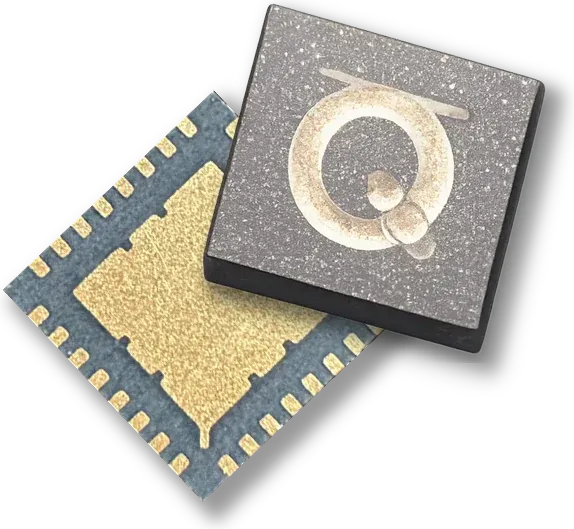
QRNG chip
A quantum entropy source on your board: a 1.5 × 1.5 mm CMOS die, under 15 mW, no light source.

We develop quantum random-number generators in standard CMOS silicon.
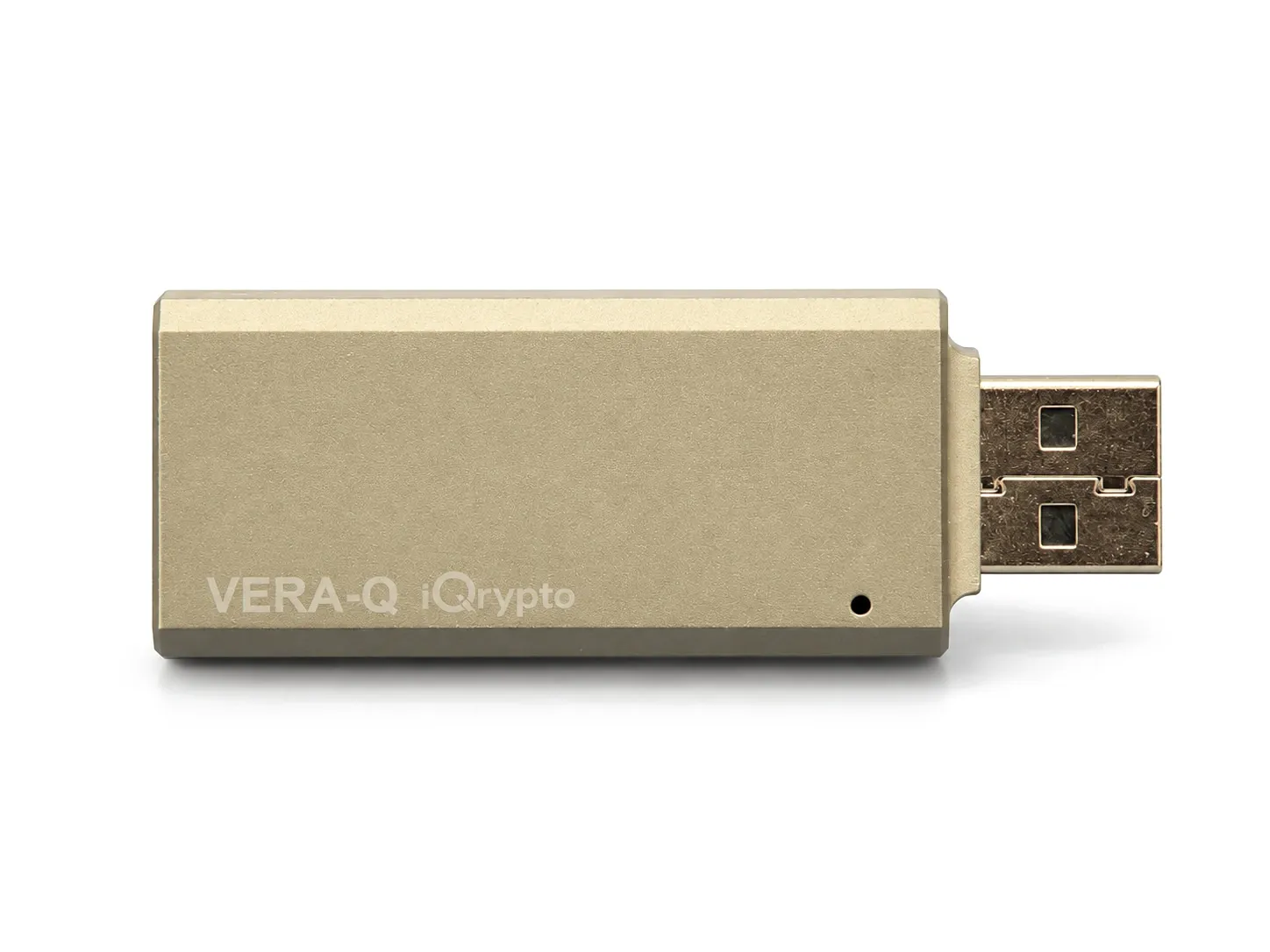
Bring quantum entropy onto your board with a QRNG chip, or inside your own silicon with entropy-cell IP.
A quantum entropy source on your board: a 1.5 × 1.5 mm CMOS die, under 15 mW, no light source.
Passwords, keys, signatures and session tokens all begin with random numbers. If those numbers can be predicted, the cryptography on top fails, however strong it is.
Post-quantum cryptography replaces the algorithms. It does not fix weak randomness underneath. And the deadlines are set: the EU asks member states to begin the post-quantum transition by the end of 2026 and to protect high-risk systems by 2030.
Inside a deliberately leaky junction of a standard CMOS chip, single electrons cross at moments that physics makes unpredictable. We count them.
That quantum noise becomes random numbers, checked by continuous health tests. No laser, no LED, no optics: just silicon.
Learn how PRNGs, physical entropy sources and quantum random-number generators work together, and what to check before using randomness for security.
Explore why post-quantum cryptography depends on reliable entropy generation, how QRNG fits into secure system design, and the role of CMOS integration.
Explore iQrypto's QryptoRand prototype: a Rust bridge from QRNG hardware to Solidity contracts, with Tremplin Web3 context, source code and integration questions.
Choose between a USB QRNG evaluation kit, a packaged chip and entropy-cell IP for your embedded design, with a practical checklist before integration.
Single electrons cross a deliberately leaky junction at moments physics makes unpredictable. We count them, test them and turn them into random numbers.
Malta Invest covers plans for an applied R&D hub linking iQrypto's Belgian semiconductor work with new activities in Malta.
Explore ETRA acquisition, timing and FPGA processing, with TEC X8 temperature control for sensors and photonic chips.
The European neutral-atom quantum-computing pilot line coordinated by Pasqal, in which iQrypto participates.
Chips JU project coordinated by Thales Research & Technology, on spintronic devices and quantum entropy.
MSCA doctoral network. We are bringing quantum entropy into a secure RISC-V system.
Tell us about your system and the USB evaluation, QRNG chip or entropy-cell IP integration you want to explore.