VERA-T
Classical TRNG Available
Use classical TRNG randomness in applications that do not require quantum entropy, or explore the shared VERA GUI and API.

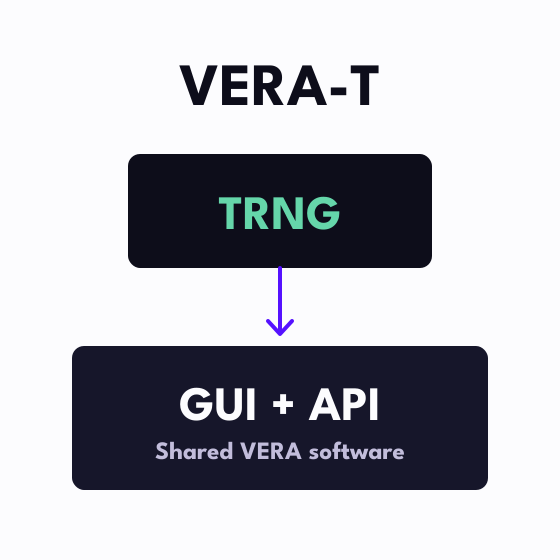
VERA-T is a classical TRNG USB kit with the same VERA GUI and API as VERA-Q. Use it in applications that do not require quantum entropy, or as a starting point for checking how an application requests and consumes random numbers.
VERA-Q is the kit for evaluating quantum-origin entropy. It requires a separate shortlist request. Software checks with VERA-T do not establish VERA-Q source performance.
Before starting, confirm the supported host platform, kit contents and supplied software releases with iQrypto. Use the installation instructions supplied for that configuration.
Follow the supplied installation instructions. Record your operating system, device revision and GUI/API releases, then check device access and host communication.
Work through the supplied GUI instructions. Check how you request random output and how the workflow fits your team's evaluation tasks.
Use the supplied API documentation to request output from your application. Test your own request pattern and record the behaviour your application needs.
Record what happens when the host or device restarts, and when the connection is interrupted. Agree how your application should respond before wider integration.
The VERA-Q Linux daemon provides the documented /dev/iqrng interface. After the supplied daemon is installed and configured, use this Python example to read a 32-byte sample.
Download the Python read example, then run it on that configured Linux host:
python3 read-vera-linux.py --bytes 32The read can wait for output; use Ctrl+C to interrupt. This illustrates host access and does not assess entropy or generate cryptographic keys. Confirm the supplied platform and software releases for your kit before evaluation.
Share the host platform, software releases, application workflow, observed behaviour and questions from your evaluation. Add the quantity and timing you have in mind.