Google’s migration target
Google’s own post-quantum timeline, useful context for ecosystem planning. It is not a universal deadline.
Read Google’s timeline ↗ (opens in a new tab)
GSCM 2026 · Malta 16–17 November 2026
Discover how randomness supports security. Explore the technology, meet iQrypto, or take four questions about your entropy practices and post-quantum plans.
4 questions · Instant result · Free 30-minute review
Your entropy readiness check
Four questions, all here. Pick one answer for each and see your snapshot. No project? Explore the technology instead.
For product teams, the four-question check gives an immediate result. Share contact details only if you choose to request a review.
0 of 4 answered
Your total readiness score
Four areas × 3 possible points = 12 points total. Higher scores reflect more reported practices and progress. These ranges are illustrative, not validated security thresholds.
At least one area scored 0. Review that gap even if your total is high; strengths in one area do not resolve gaps in another.
This is a discussion aid, not an entropy measurement or a security or compliance assessment. Source type alone does not establish quality. Unknown answers identify information to gather.
The four questions each contribute up to 3 points for reported source visibility, assessment and monitoring, failure response, and migration progress. This illustrative weighting is not independently validated.
Discuss these dates with your team and customers when planning product updates and qualification cycles.
These are planning references. Applicability depends on jurisdiction, use case and customer requirements.
Google’s own post-quantum timeline, useful context for ecosystem planning. It is not a universal deadline.
Read Google’s timeline ↗ (opens in a new tab)The coordinated EU roadmap targets migration of high-risk use cases by the end of 2030.
Read the EU roadmap context ↗ (opens in a new tab)The idea behind iQrypto
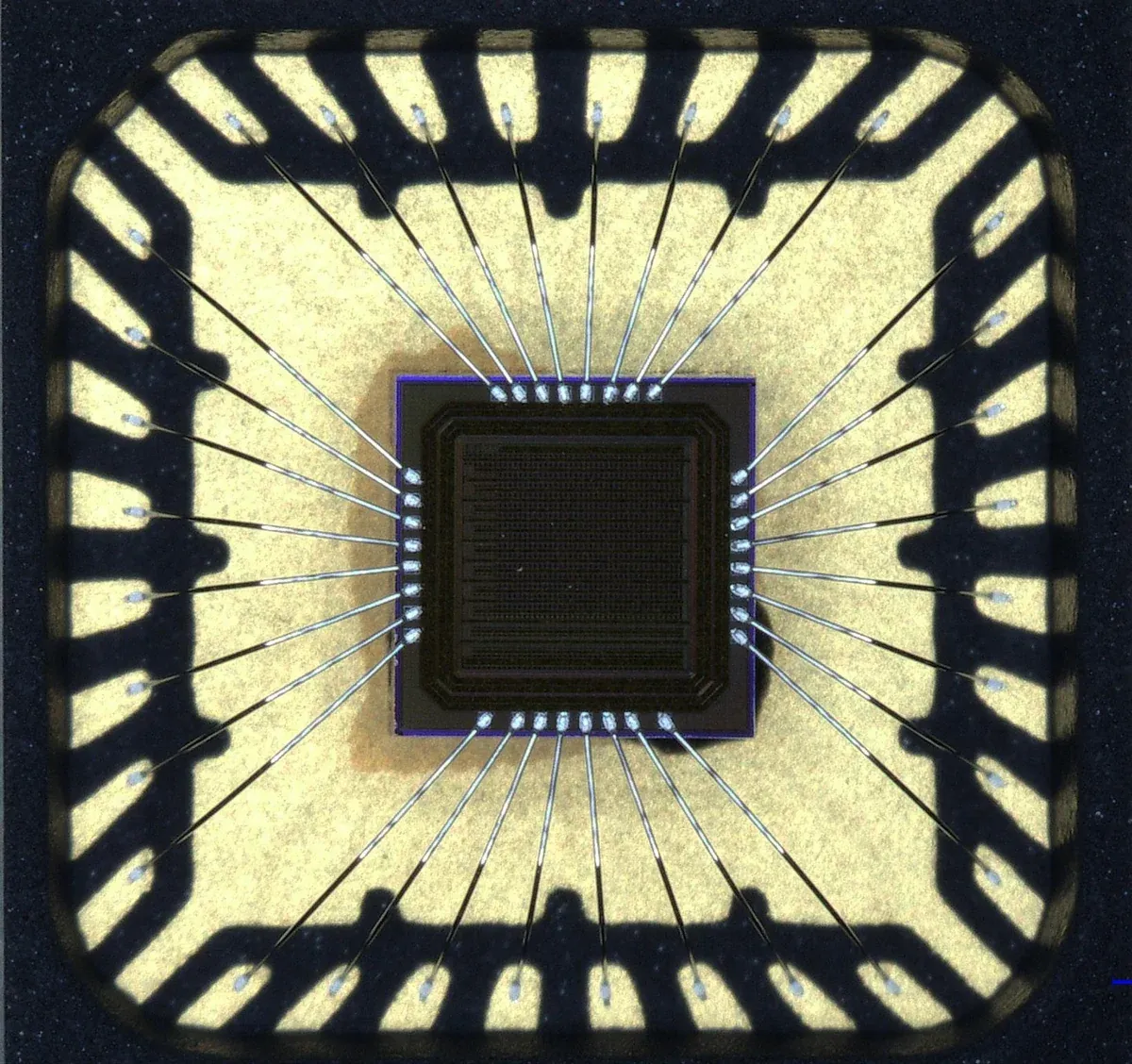
Our approach uses electron shot noise in standard CMOS to create a physical entropy source, with a path from USB evaluation to chip and entropy-cell IP integration.
A reverse-biased PN junction creates discrete electronic events. No laser, LED or optics.
Digitise the signal, assess the source, run continuous health tests and condition the output.
Evaluate through USB, then discuss chip or entropy-cell IP integration and your system’s failure handling.
Our NIST SP 800-90B work is an internal assessment. Formal validation remains on the roadmap. Discuss supporting evidence and operating conditions with the team.
Explore the technology in detail ↗Choose an evaluation path that matches your requirements.
Practical randomness over USB for applications that do not require quantum entropy, with the shared VERA GUI and API.
Explore the quantum entropy approach through a USB kit before discussing deeper integration.
Discuss QRNG chip evaluation, entropy-cell IP, operating conditions and your qualification plan.
Request a free 30-minute entropy review.
Discuss your source, monitoring and integration needs, and identify a practical next evaluation step. Bring your questions; no detailed design files needed.
If you completed the check, your answers are included in the use-case field. You can review or edit them before sending.
Share your contact details and what you want to explore.